The fashion accessories market is undergoing a period of restructuring. Since the summer of 2026, new European regulations govern the destruction of unsold textiles and clothing, while environmental claims are more closely monitored. These constraints are changing the way brands design, produce, and communicate about their trendy accessory collections. Choosing a bag, a clutch, or jewelry this season is no longer solely a matter of taste: traceability and sustainability are now part of the equation.
European Regulation and Fashion Accessories: What Changed in 2026
The European regulation on the eco-design of sustainable products (ESPR) introduced, on July 19, 2026, a ban on the destruction of unsold clothing and footwear accessories for large companies. Unsold items must now be directed towards reuse, donation, or recycling.
At the same time, the French law n° 2026-602 of July 8, 2026, directly targets fast fashion. It takes into account the number of references launched by a brand and the lack of incentives to repair. REP (extended producer responsibility) contributions can be adjusted based on these criteria. An accessory designed to last a few weeks can therefore potentially be more expensive to produce and bring to market than a piece intended for longevity.
For consumers, this evolution translates into a concrete signal: the durability of an accessory matters as much as its appearance. Brands that display vague environmental claims are exposed to increased sanctions, pushing the entire sector towards greater transparency.
In this context, browsing the accessories offered by Les Galeries de la Mode allows for the comparison of items whose manufacturing and materials are documented, a reflex that makes perfect sense in light of the new regulatory requirements.

Bum Bag, Clutch, and Tote: Which Models to Favor This Season
The bag remains the most structuring accessory of an outfit. This season, three formats stand out for their versatility.
- The bum bag is making a comeback in reworked versions, often in natural materials (linen, braided cotton). Worn crossbody or at the waist, it adapts well to both casual outfits and more dressed-up looks.
- The evening clutch is gaining in formats: slightly oversized models are replacing the miniature version, making them usable daily and not just for special events.
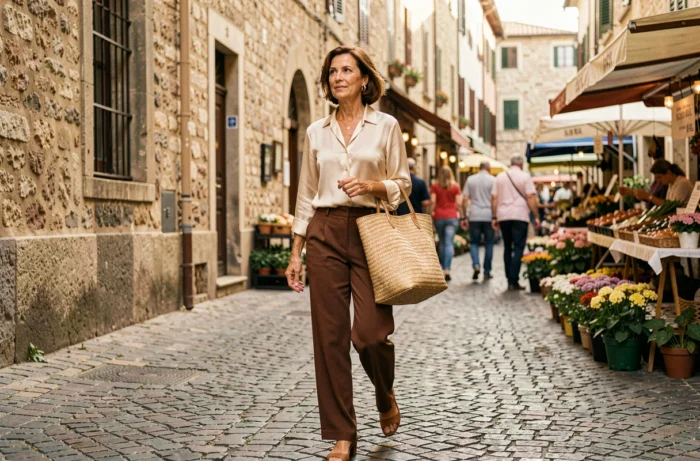
- The raffia or wicker tote remains a safe bet for spring-summer. Its capacity and natural aesthetic make it a coherent choice with the trend for raw materials.
The choice between these models depends on actual use. A bum bag is suitable for active days. The clutch adds a more polished touch. The tote, on the other hand, replaces the catch-all bag without sacrificing style.
Natural Materials and Longevity
The enthusiasm for raffia, linen, and braided cotton is not just aesthetic. These materials better meet the criteria for reparability and traceability than low-quality synthetics. However, their resistance to moisture remains a weak point: an untreated wicker tote does not handle prolonged rain well. Field reports vary on this point depending on the quality of the weaving and the finishes applied.
Trendy Colors and Prints for Spring-Summer Accessories
Bright colors dominate accessory collections this season. Sunny tones (orange, saffron yellow, coral) prevail on bags, scarves, and jewelry. They serve as contrasting touches on a neutral outfit, which explains their success: one colorful accessory is enough to transform a basic ensemble.
Floral prints remain present, but in more graphic variations than before. Oversized patterns on solid backgrounds replace classic small flowers, resulting in a more contemporary look.
Combining Colors Without Overloading
The most reliable rule is to limit colorful accessories to two per outfit. A coral scarf paired with a natural raffia bag creates balance. Adding earrings in a third bright tone risks dispersing attention. Two colored pieces maximum per look remains a simple and effective guideline.
Green Claims on Fashion Accessories: How to Read Labels
Terms like “eco-friendly,” “sustainable,” or “green” are flourishing on labels and product sheets of accessories. The European regulatory framework makes these claims harder to use without concrete evidence. A brand that labels a bag as “sustainable” without providing verifiable data on composition, material sourcing, or manufacturing conditions is subject to sanctions.
For consumers, a few reflexes can help distinguish sincere communication from mere marketing arguments:
- Check if the exact composition of the materials is indicated (and not just “natural materials”).
- Look for a mention of the country of manufacture, not just the country of design.
- Observe if the brand communicates about the reparability of the item (zip replacement, stitching, leather treatment).
The available data does not yet allow for easy comparison of two accessories based on their actual environmental impact. Harmonized environmental labeling is progressing, but no standardized score yet covers all fashion accessories. In the meantime, transparency about materials and origin remains the most reliable criterion.
Trendy Accessories and Sustainable Wardrobe: A Balance to Find
Following accessory trends each season may seem contradictory to a reasoned consumption approach. The most relevant pieces are those that last through multiple seasons without losing their appeal. A bum bag made of vegetable-tanned leather or a pair of classic-shaped sunglasses retains its place in a wardrobe well beyond a single summer.
The scarf illustrates this logic well: worn as a headband, tied on a bag, or around the neck, it changes function depending on the outfit. A versatile accessory justifies its purchase better than a single-use piece, no matter how trendy it may be.
The ban on the destruction of unsold items pushes brands to produce more adjusted volumes. For consumers, this sometimes means less frequent restocks on certain pieces. Spotting early the accessories that match one’s style and checking their manufacturing quality becomes a tangible advantage, both for the wallet and for the sustainability of the wardrobe.