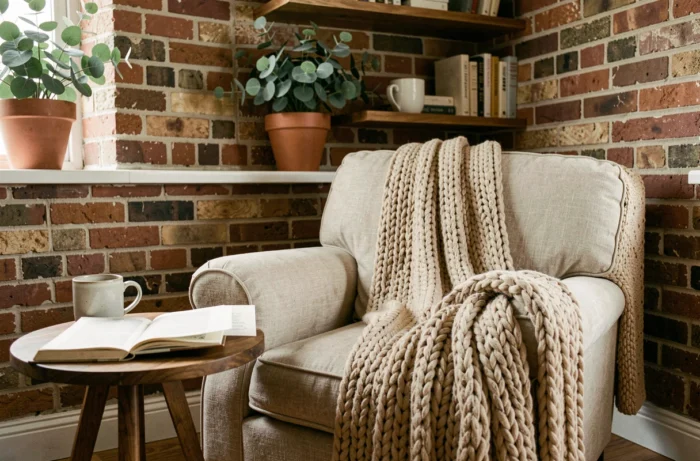
A home perceived as a cocoon relies less on the accumulation of textiles than on measurable parameters: surface temperature of walls, air renewal, level of natural light, and indoor acoustics. Transforming a house into a space of sustainable comfort requires addressing these fundamentals before choosing a sofa or a wall color.
Ventilation and indoor air quality: the first lever for a healthy cocoon
A poorly ventilated cocooning interior quickly becomes a trap for pollutants. After insulation work, increased airtightness reduces unwanted air infiltration, which is desirable for energy performance, but also eliminates passive renewal. Cerema found that about 75% of controlled ventilation installations had non-compliance issues in its 2017-2018 report.
Since building permits submitted in 2022, verifying ventilation systems has been mandatory upon completion of new housing under RE2020. For existing buildings, we recommend measuring extraction rates in each wet room before any decoration project. A properly sized humidity-controlled VMC type B maintains a relative humidity level within comfort thresholds without drying out the air in winter.
When wishing to delve deeper into home layout topics, it is useful to consult fullpress.info in detail to cross-reference various technical and decorative approaches.
Summer comfort and solar protection: avoiding the thermal kettle effect
RE2020 now incorporates the risk of overheating through discomfort degree-hours. A living room bathed in natural light from large southwest-facing windows can exceed regulatory thresholds during the summer if no external solar protection is provided.
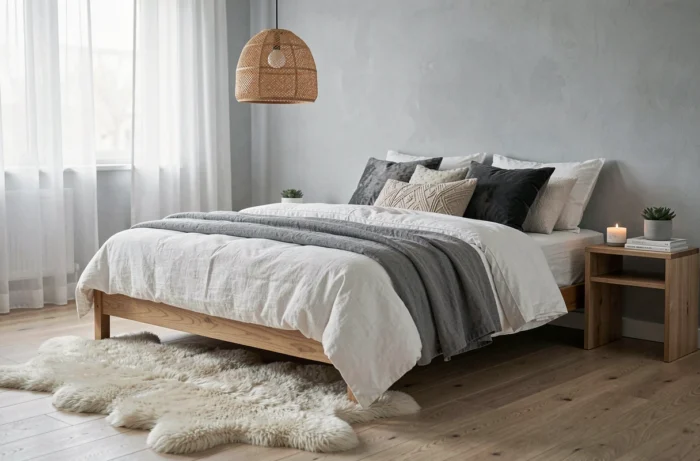
The classic cocooning approach (thick throws, heavy curtains, long-pile rugs) exacerbates this phenomenon in summer. We observe that external solar protections are more effective than internal blinds, as they intercept radiation before it passes through the glazing. Adjustable sunshades, slatted shutters, bioclimatic pergolas: these devices contribute as much to comfort as to the facade’s decoration.
The thermal inertia of walls also plays a role. A stone or solid brick wall stores the coolness of the night and releases it during the day. In contrast, a lightweight drywall partition on a metal frame offers virtually no thermal lag. Choosing your cladding materials is also about choosing your summer comfort.
Residential lighting: color temperatures and lighting scenarios
The cozy atmosphere of a room directly depends on the color temperature of the light sources. Below 2,700 K, the light leans towards amber and promotes relaxation. Above 4,000 K, it stimulates alertness, which is suitable for a kitchen work surface but sabotages the atmosphere of a living room or bedroom.
Layering multiple levels of lighting remains the most reliable method for creating a modular luminous cocoon:
- Indirect lighting in cornices or LED strips (IRC above 90) to bathe the walls in soft light without a visible source.
- Adjustable accent lamps positioned at seating height near the sofa or bed for reading comfort.
- A focal point of light (adjustable wall lamp, recessed spotlight) to highlight a decorative element or wall texture.
Each room should have at least three independent circuits to adapt the ambiance according to the time of day. A dimmer on the main circuit is a modest investment that radically changes the perception of space.

Materials and acoustics: choosing textiles by function, not by trend
Decor magazines prescribe washed linen, corduroy, or boucle wool according to the seasons. In practice, the choice of upholstery fabric for a cocooning interior should first meet a technical criterion: its acoustic absorption coefficient.
A living room with a hard floor (tiles, polished concrete, solid wood) and little textile furniture generates a high reverberation time. Conversations become tiring, and background noise increases. A sufficiently dense short-pile rug, floor-length lined curtains, and thick fabric cushions on the sofa significantly reduce this reverberation time.
We recommend concentrating absorbent elements at points of first sound reflection: the wall facing the speakers or television, the floor between the sofa and the screen, the ceiling above the dining table if it is in an open room. This targeted placement is more effective than a scattered decorative accumulation.
Colors and thermal perception in the bedroom and living room
Warm shades (terracotta, ochre, brown) increase the perceived warmth in a room, regardless of the actual temperature. In contrast, cool blues and light grays give an impression of freshness. This psychophysical data guides the choice of colors according to the room’s orientation.
A north-facing bedroom gains perceived comfort with walls in warm tones and low color temperature lighting. A south-facing living room, prone to summer overheating, fares better with neutral or cool shades that do not amplify the sensation of heat.
Thermal sieves and housing decency: a legal framework that redefines the cocoon
Since January 1, 2025, homes rated G on the DPE are considered indecent for new contracts, renewals, and tacit extensions. No decoration compensates for a failing thermal envelope. A tenant or owner-occupier who feels cold walls, drafts at the joinery, or condensation on the glazing lives in a home that does not meet minimum comfort conditions.
Before investing in interior decoration, it is pertinent to check the energy rating of the home and prioritize energy renovation work. Insulating walls from the outside, replacing single-glazed windows, treating thermal bridges at floor-facade junctions: these interventions transform the feeling of comfort far more sustainably than a change of furniture.
The true cocoon combines a high-performance envelope, renewed indoor air, appropriate lighting, and materials chosen for their acoustic and thermal properties. The rest, colors, objects, layout, comes to dress a solid technical base.