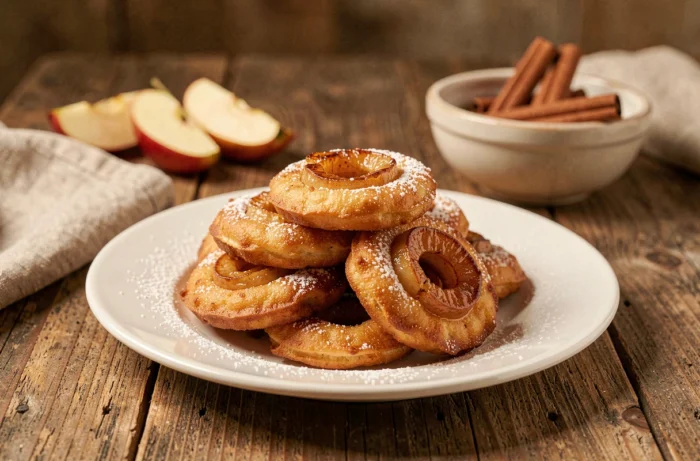
Between a batter that is too thick, which absorbs the oil, and poorly controlled frying that leaves a soft doughnut, the success of a traditional apple fritter depends on measurable parameters. Frying temperature, thickness of the slices, consistency of the batter: each variable alters the final result. This article analyzes the technical discrepancies that separate a crispy fritter from a grease-soaked one.
Frying Temperature and Oil Absorption: The Key Data
| Oil Temperature | Observed Result | Fat Absorption |
|---|---|---|
| Below 160 °C | Soft batter, slow cooking, heavy fritter | High |
| 170-190 °C (ideal range) | Quick sear, golden crust, melting interior | Low |
| Above 200 °C | Burnt exterior, raw interior, risk of ignition | Variable, with danger |
The range of 170 to 190 °C is the determining factor. Below this, the batter absorbs oil like a sponge. Above this, the surface chars before the apple is cooked.
A cooking thermometer is more reliable than the test of throwing a piece of bread into the oil. Visual estimation introduces a margin of error that is enough to shift from a light fritter to a greasy one. Anyone who masters the traditional apple fritter recipe knows that this thermal control makes all the difference.
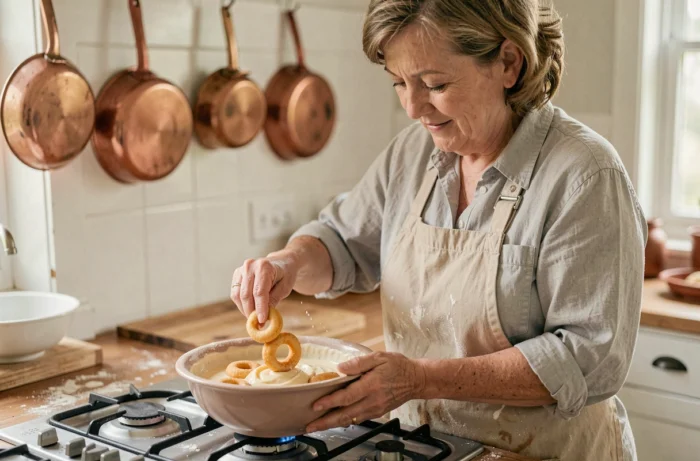
Apple Fritter Batter: Ratio of Flour, Milk, and Eggs
The base of a classic fritter batter consists of flour, eggs, milk, and a fat (vegetable oil). Baking powder provides the lift. A common trap is to achieve a batter that is too liquid or too thick.
Ideal Batter Consistency
The batter should coat the apple slice without dripping off. If it slides off immediately, it lacks flour. If it forms a thick block, it will create a doughy crust that masks the fruit.
A resting time of about thirty minutes after mixing allows the gluten to relax. The batter becomes more pliable and adheres better to the apple during frying.
The Role of Lemon and Vanilla
Lemon juice squeezed on the apple slices prevents oxidation and adds acidity that balances the sugar. Vanilla sugar, sprinkled on the slices before resting, deeply flavors the fruit.
These two ingredients are not just decorative. Lemon alters the surface texture of the apple, improving the batter’s adherence during dipping.
Managing the Frying Bath: Overloading and Filtration
Dipping too many fritters at once causes a sharp drop in the temperature of the bath. The result is immediate: the batter no longer sears, the fritters stick together, and absorb more fat.
Three to four pieces per batch are sufficient to maintain a stable temperature. This recommendation applies to a standard home pot.
Reusing Oil After Cooking
There is no fixed number of reuse cycles. The lifespan of the oil depends on the temperature reached, the type of fried foods, and the presence of charred residues.
- Filter the oil once cooled to remove burnt batter fragments, which accelerate its degradation
- Discard the oil if it smokes at normal temperature, foams excessively, or has a dark color and rancid smell
- Store the filtered oil in a closed container, away from light, to slow oxidation
Burnt residues in the bath alter the taste of subsequent batches. Systematic filtering after each frying session prolongs the quality of the oil and the fritters.
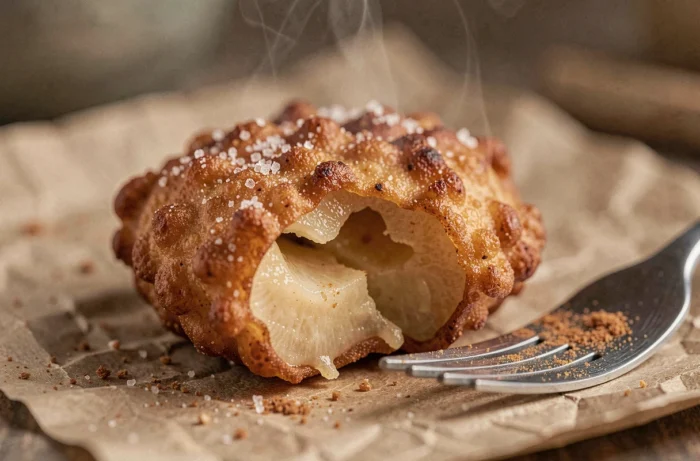
Safety in Home Frying: A Topic Distinct from Culinary Tips
Home frying poses a real risk that classic recipes rarely address. Oil heated beyond its smoke point can ignite in seconds.
- Never leave the room while the oil is heating, even for a moment
- Keep children and pets away from the cooking area
- Do not exceed the maximum level indicated on the fryer or pot (the oil rises when fritters are added)
- In case of fire, cover the pot with a lid or a damp cloth, never with water
Excessive temperature is the leading cause of frying-related fires. The cooking thermometer thus serves a dual purpose: fritter quality and safety.
Choosing Apples and Cutting: The Difference Between Varieties
Not all apples react the same way to heat. Firm varieties that hold up during cooking (like reinette or granny smith) maintain their texture when fried. Mealy apples break down and make the batter moist inside.
Cutting into regular slices, cored in the center, ensures even cooking. Slices that are too thin become transparent after frying. Slices that are too thick remain raw in the center while the batter is already golden.
A thickness of about half a centimeter offers the best compromise between the fruit’s tenderness and the coating’s crispness. The ratio of batter to apple remains balanced at this size.
A successful apple fritter hinges on three precise controls: the temperature of the bath, the number of pieces per batch, and the consistency of the batter. Mastering these parameters produces a reproducible result, regardless of the chosen recipe.