The flexibility of residential and professional spaces has never been more in demand, as the boundaries between indoor and outdoor blur under the influence of new practices. Bio-sourced materials are gaining ground in renovation projects, despite persistent regulatory constraints.
The integration of greenery into built structures, once marginal, now shapes the specifications of architects. Between increased environmental requirements and the personalized expectations of occupants, hybrid solutions are emerging as a response to contemporary challenges.
Towards a new harmony between interior, exterior, and nature
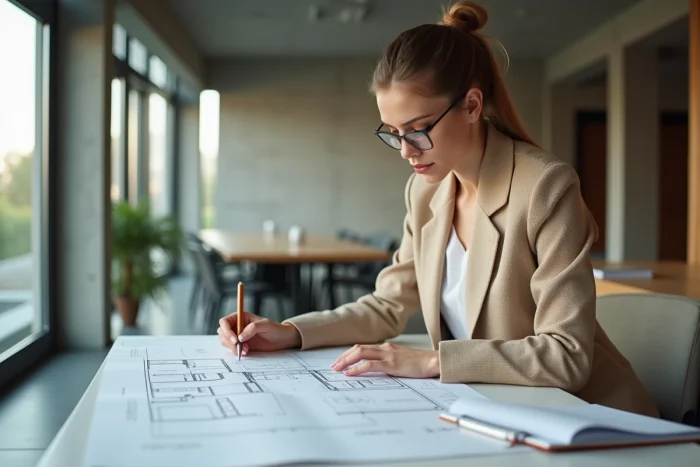
Contemporary architecture no longer simply juxtaposes volumes: it merges interior, exterior, and nature in a new dynamic. In Paris, Bordeaux, and beyond, architects are working to create natural transitions, erasing the rigid boundaries of the past. Three major axes intertwine today: the mineral approach, bio-sourced materials, and advanced technology. These logics, long kept at a distance, intertwine in bold creations, where the identity of the place guides every choice.
The arrangements draw inspiration from three major models. On one side, complete transparency, inherited from the California Case Study Houses and elevated to a rare level of demand by Saota, emphasizes light and opens widely to the outside. Conversely, cellular flexibility, as developed by Shigeru Ban in his projects, allows spaces to adjust to current uses. Finally, programmatic stratification, popularized by OMA, overlays functions and circulations for a renewed experience of the place.
Every stage of design is infused with environmental concerns. Bioclimatic optimization, the integration of living elements, and even the desire to regenerate the ecosystem are approaches that shape exemplary realizations. Lacaton & Vassal, for instance, blend modernity, heritage preservation, and greening to create vibrant spaces. Committed agencies, such as SIA Architecture, continuously re-examine the relationship between built structures and landscape to make every square meter more livable, more respectful, and more alive.
These major trends are reflected in three action axes:
- Rehabilitation: enhancing the existing, responding to current uses, opening new horizons.
- Architectural signature: combining sustainable elegance and adaptability.
- Vegetal integration: rebalancing materials, light, and biodiversity to enrich each space.
What innovations will shape architecture and decoration in 2025-2026?
The next generation of projects draws from raw materiality: exposed concrete, cut stone, structural glass, as well as glued laminated timber and stabilized raw earth. These materials, chosen for their low impact and authentic character, reflect a desire to reconnect with the living. Technology, far from being a gadget, becomes a performance driver: smart glazing, adaptive sunshades, integrated solar panels, ETFE membranes… Spaces gain climatic intelligence, continuously adapting to needs and seasons.
The dialogue between nature and architecture intensifies. Vertical gardens, self-cleaning facades, rainwater harvesting: these devices, once exceptional, are becoming commonplace. Regenerative architecture is expanding, even inspiring urban permaculture. Colors now draw from palettes of wood, earth, and foliage, infusing interior decoration with a new softness. Natural light is invited everywhere, with large openings and diffusion devices that vary with the season.
Trends in Paris and Bordeaux testify to this: rehabilitation now prioritizes adaptation without sacrificing refinement. The architectural project is viewed as an organism that evolves, blending modernity, heritage anchoring, and versatility of uses.
Practical tips for sustainably transforming your living spaces
To renew your spaces, consider each room as a living entity, in perpetual evolution. Contemporary architecture focuses on modularity, openness, and connection with the outside. Before transforming your house or apartment, start by observing the actual uses of each space. The most innovative architects envision places that evolve with needs, capable of accommodating changes in pace, lifestyle, or daily habits.
Here are some levers to guide your choices:
| Advice | Impact |
|---|---|
| Maximize natural light | Promotes well-being and reduces energy consumption |
| Choose sustainable and healthy materials | Limits environmental footprint, improves indoor air quality |
| Enhance the flexibility of spaces | Allows adaptation to new uses and the evolution of the household |
Transforming an old factory into a loft, restoring a country house: these examples illustrate the search for adaptability at the heart of today’s realizations. At Douglas Elliman France, it is observed that long-term success relies on a strong architectural identity and impeccable execution. The connection with nature is cultivated at all levels: green roofs, patios, large openings, every detail contributes to a soothing atmosphere. Open spaces and fluid circulations are essential, but everyone’s intimacy continues to be preserved.
To ensure this transformation lasts, favor clean lines, well-thought-out volumes, and harmony between furniture and materials. Balance is created in the meeting of heritage and innovation, between daily comfort and technical advancements. The challenge remains to imagine what your spaces will reveal once freed from their old frameworks.