An alkalinity level above 150 ppm complicates the maintenance of the chemical balance of a pool. pH adjustments then become laborious, making traditional treatments sometimes ineffective or counterproductive.
This situation promotes the formation of limescale deposits and can lead to cloudy water, despite functional filtration. Hasty interventions risk worsening the situation, especially in the case of overdosing corrective products.
Why high alkalinity is a problem in your pool
When the alkalinity of your pool exceeds the recommended range, the water tips into excess alkalinity. This pH imbalance freezes the pH level, making it nearly immovable. Adjustments become a headache; usual products no longer act as they should, and the water quality deteriorates.
Under these conditions, limescale deposits appear at high speed. They are quickly noticeable: white marks on the walls, clogged equipment, skimmers that get stuck. Additionally, the water becomes cloudy, and for swimmers, there are unpleasant sensations: skin tightness, eye stinging, and sometimes even persistent discomfort after swimming.
Filtration struggles to keep up. Filters become saturated, circulation slows down, and one ends up multiplying product dosages. In this context, it becomes urgent to ask: what to do if pool alkalinity is too high? There are concrete ways to act without draining the pool or sacrificing user comfort or the lifespan of the equipment.
Here are the actions to take to limit the consequences of excess alkalinity:
- Regularly monitor the total alkalinity to detect any drift.
- Gradually correct the pH to avoid sudden variations, which can cause discomfort and chemical imbalances.
- Thoroughly clean all pool equipment to slow down the accumulation of deposits and maintain the proper functioning of the system.
This vigilance is necessary to maintain a satisfactory water quality, especially during temperature changes or just after adding fresh water.
How to recognize and measure excess alkalinity in water
Before taking any action, it is essential to accurately determine the alkalinity level in the pool. Certain signs are unmistakable: cloudy water, a rough sensation on the skin, stinging eyes, or those infamous white marks that cling to the walls and bottom. If you observe these symptoms, it is highly likely that the total alkalinity exceeds the norm.
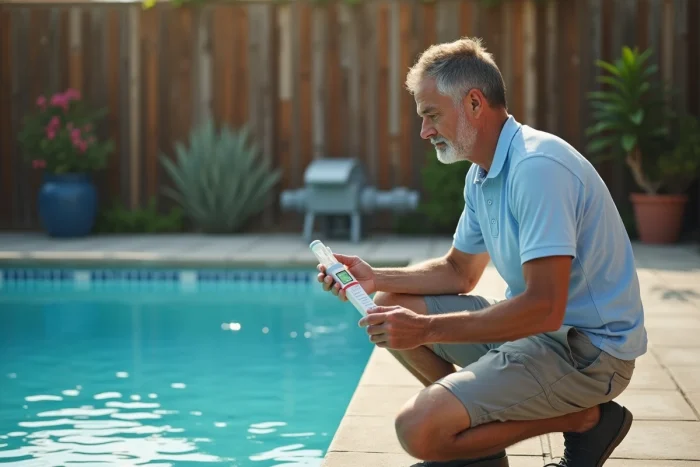
To check, set aside the simple glance. Rely on reliable tools. The water test remains the reference. You can use three types of instruments:
- Test strips, ideal for obtaining a quick and effortless result.
- The chemical test kit, more precise in its measurements, perfect for regularly monitoring water evolution.
- The electronic tester, which provides an instant diagnosis, particularly appreciated when the pool requires increased attention.
Compare the result with the manufacturer’s recommendations or expert advice. If the pool water alkalinity rises above 120 mg/l, action must be taken without delay: the water balance and the health of your installations depend on it. Always remember to check the alkalinity of your pool after water additions or a storm, as variations can be rapid.
Concrete solutions to restore balance and enjoy healthy water
When the pool alkalinity skyrockets, the first reaction is to adjust the water chemistry methodically. It is advisable to use an alkalinity reducer, available in the form of sodium bisulfate or a suitable acid for the pool (hydrochloric or sulfuric, depending on the setup). Pour this product slowly, ideally near the return jets to ensure even distribution. Follow the dosages indicated on the packaging. Overdosing can lead to other imbalances and complicate the future stability of the water.
Remember to let the filtration system run for several hours after adding the corrector. This step facilitates mixing and accelerates the decrease of the alkalinity of your pool. Wait between 24 and 48 hours, then take another measurement of the pool water alkalinity with a reliable tester. If the value remains above the ideal range (80 to 120 mg/l), repeat the treatment step by step.
Practical tips for effective treatment
- Always proceed in stages: split the product dosage rather than pouring it all at once.
- Do not attempt to act on both pH and alkalinity at the same time: start by correcting the alkalinity, and the pH will follow naturally.
- After each treatment, monitor the water quality to detect any new imbalance.
Mastering water alkalinity is part of a logic of anticipation and regular maintenance. Taking care of the chemical balance, limiting sudden interventions, and using products judiciously is the guarantee of achieving clear water, free from cloudy water or limescale deposits. There is nothing more reassuring than being around a pool with clear, stable water, ready to welcome swimmers without unpleasant surprises.