
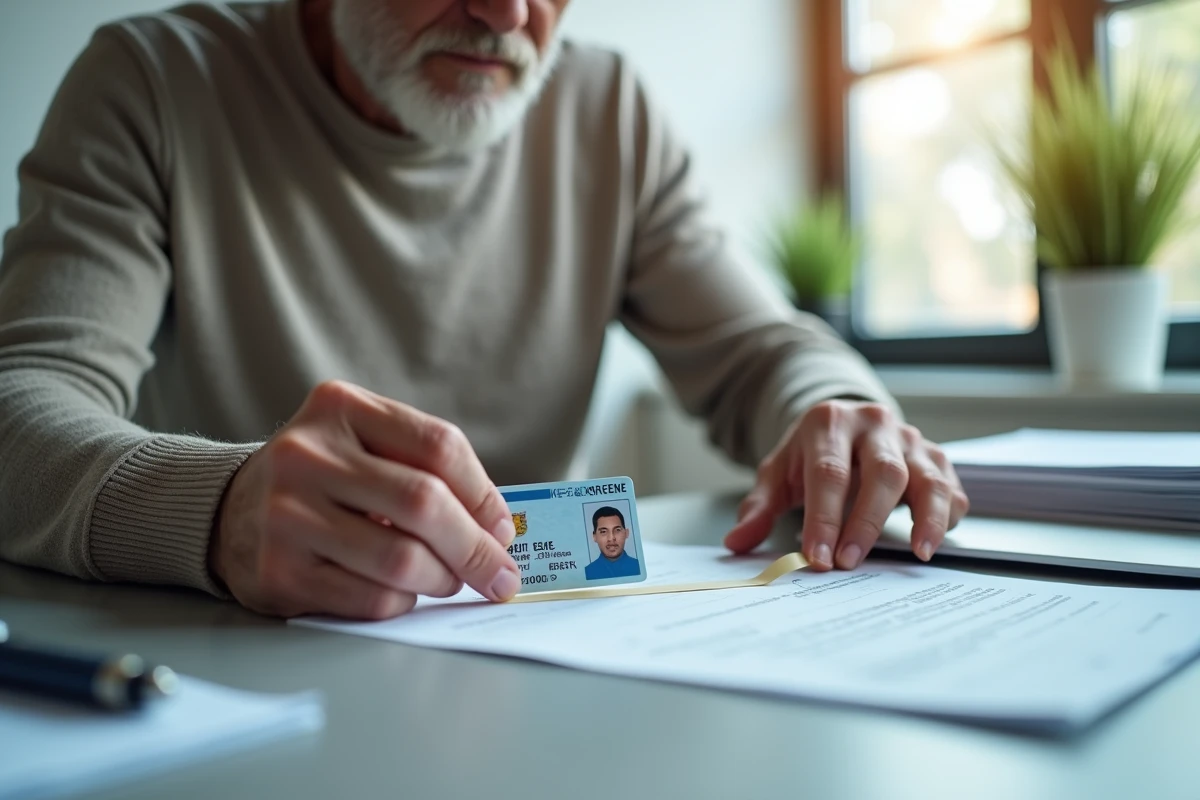
Sometimes, it only takes a tiny gesture to tip the scales: a piece of adhesive tape placed on a driver’s license, and suddenly the document has no legal value. Unbeknownst to them, they believe they are protecting their most precious paper. But at the slightest check, this seemingly good idea turns out to be a very real trap. In France, even the slightest sticking can turn the official title into a rejected document. Yet, the use of tape still attracts many drivers, caught between the temptation to preserve their license and the fear of being caught by the authorities.
Tape on the license: a widespread reflex in the shadows
Concerned about seeing their license age gracefully, some motorists improvise. They cover their document with tape, convinced they are acting sensibly. This trick circulates among friends, spreads on the internet through a procedure for putting tape on the license, or is exchanged on social media. The idea is particularly appealing as it seems harmless: to protect, without obscuring, to preserve without erasing. Except that in practice, the temptation of DIY clashes with administrative reality.
No official text tolerates the addition of an adhesive film, even transparent, on the famous key. For law enforcement, the modification is clear: it doesn’t matter if the tape is invisible or carefully applied. In the eyes of the law, this license is no longer compliant. Home protection, however limited, crosses the regulatory red line.
One can understand the desire: between the sweat on a license that has been at the bottom of a pocket for too long and the rain that damages the photo, the fear of seeing one’s title deteriorate is real. Young drivers, often warned, see it as a precautionary measure. But the penalty looms, and doubt creeps in at every traffic stop.
The very real risks of a modified license
Zero tolerance leaves no room for improvisation. Police and gendarmerie services conduct thorough checks, tracking anything that could alter an identity or driving title. From a regulatory standpoint, the license must remain strictly in its original state: no additions, no sticking, not even to prevent wear.
Several consequences threaten anyone presenting a modified license, even discreetly.
- Risk of a fine: the modification, no matter how minimal, can immediately result in a financial penalty.
- Seizure of the license: on-the-spot confiscation of the title is common as soon as an intervention is noted.
- Administrative suspension: depending on the situation, driving may be prohibited until everything is regularized.
That’s not all: insurance may refuse to compensate a driver if their license is not compliant at the time of the accident. All this DIY can end up costing much more than just the simple degradation of the paper support. To avoid any unpleasant surprises, the solution recognized by the administration remains the transparent plastic sleeve, the only protection accepted during checks. If the license is damaged, the duplicate request is made online, via ANTS, restoring the validity of the document.
For those living abroad with a damaged French license, the request must go through CRÉPIC or consular services. The requirements remain strict, and any deviation from the original document systematically works against the holder.
Choosing the right method: avoid tape, focus on the right reflex
Before any handling, inspect your license carefully. No scissors, no additions: the only way to extend its lifespan without deviating is the transparent plastic sleeve. It protects, preserves readability, and above all, it does not betray any modifications during checks.
If you still hesitate, you should know that even the slightest strip of tape applied to a printed area, even just the edge, can be perceived as forgery. Short-term caution then becomes synonymous with administrative troubles, especially for those in a probationary period or exposed to heightened scrutiny during traffic stops.
In the case of an already damaged license, the recommended approach is to request a duplicate through the official platform, with scanned documents as support. This duplicate immediately restores the validity of the driving right and protects the motorist from mishaps on the road.
Behind the wheel, improvisation has its limits. If a gesture seems reassuring at the moment, it can turn any traffic check into a source of trouble. The road forgives little for approximations: tape may seem discreet… until the day it turns everything upside down.