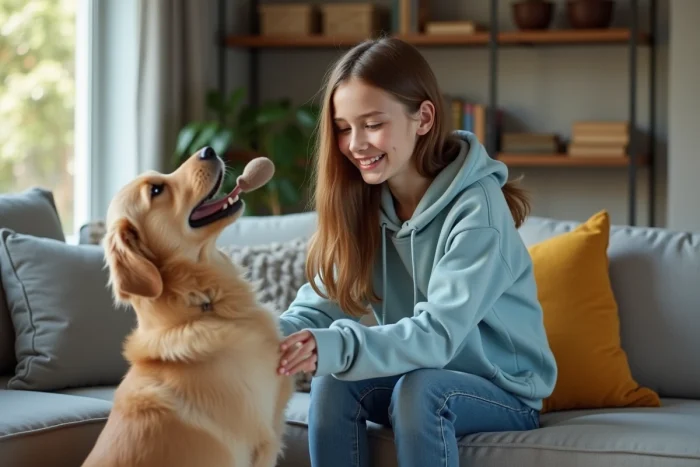
The French law prohibits a minor of 16 years or younger from working without parental permission and strict supervision. However, some families agree to entrust their pets to 15-year-olds for occasional or regular sitting, thus circumventing the usual frameworks of professional platforms.
Online platforms impose a minimum age of 18, but classified ads or word-of-mouth can sometimes help find suitable missions for young people under specific conditions. The responsibilities, the expectations of the owners, and the reliability of the young pet sitter are crucial for building a trusting relationship.
Pet sitting at 15: what it really involves
At 15, taking care of a pet is not just about walking a dog or feeding a cat. This task requires constant attention, a true understanding of the animals’ needs, and the ability to act decisively if the situation demands it. Each sitting involves the trust of an owner, who becomes even more demanding when their pet is entrusted to a teenager.
The legal framework in France is categorical: the labor code prohibits any paid employment without written consent from the parents and supervision by an adult. This parental authorization, in black and white, is imperative, just like the presence of a responsible adult during home sitting. Owners, for their part, look for a young person capable of understanding the animal’s character, intervening in case of unforeseen events, and ensuring their companion’s well-being seriously.
Here are the points to respect to gain the trust of families:
- Respect for instructions: each animal has its rituals, schedules, and specific needs. It is essential to follow the owner’s recommendations to the letter.
- Ongoing communication: regularly providing updates, sending photos or short messages helps reassure the family and demonstrate seriousness.
- Appropriate insurance: before starting, ensure that civil liability covers the pet sitting activity. This is a guarantee for both the young person and the host family.
To do pet sitting as a minor, take the time to check the regulations, prepare a solid file, and discuss all the details with your parents and the concerned owners. All the steps are detailed on the page “Becoming a pet sitter at 15: tips and steps to follow – Les Animaux de la Fée”. The legal framework, family expectations, and ground reality must be respected so that the sitting is not taken lightly, far from a simple service between neighbors.
What solutions are there for pet sitting when you are a minor?
Pet sitting at 15 requires both rigor and organization. Families need a reliable pet sitter who can ensure the care of pets in their absence, whether for a day or a few weeks. Here are the tasks usually entrusted:
- home visits,
- dog walks,
- feeding,
- playtime,
- and even administering basic care.
In France, the law states that a minor must present a written parental authorization. The presence of an adult for transportation or during sitting at the owner’s home remains an additional safety measure, often required.
The sitting contract formalizes the agreement between the parents, the pet sitter, and the pet owner. This document specifies the schedules, the care to be provided, emergency numbers, and the terms of payment or volunteering. Before each sitting, a preliminary meeting with the animal, the owner, and the young pet sitter’s parents is highly recommended.
Here are some tips for acting under good conditions:
- Accept missions only from close people, neighbors, or acquaintances validated by your family.
- Ensure that the civil liability insurance adequately covers the pet sitting activity.
- Start with short-term sittings, perfectly suited to your age and experience.
For teenagers, pet sitting sometimes resembles animal babysitting: a way to take responsibility, earn a little pocket money, under the watchful eye of parents. For others, the commitment remains voluntary, within the family or friendship circle. At every stage, prioritize adult supervision, clarity of rules, and the safety of all.

Practical tips for getting started and finding your first clients
Starting as a pet sitter at 15 relies on trust and proximity. Pet owners prefer young people recommended by their circle, whom they know to be serious. Approach neighbors, family friends, or acquaintances who have pets. Write a short profile mentioning your passion, past experiences, and qualities like punctuality or patience. Even a one-time sitting of a dog, cat, or small pet counts: each experience weighs in the balance in the eyes of families.
Organize a first meeting with the pet owner and the animal, accompanied by a parent. Clearly define the services offered: visits, walks, playtime, adherence to care instructions. Discuss openly about rates: they will be adapted to the mission, its duration, frequency, and specific needs. For a solid approach, nothing beats a sitting contract signed by the parents, which clarifies responsibilities and compensation.
Regarding the search for missions, focus on local communication: handwritten flyers in the neighborhood, information at the town hall or social center, word-of-mouth. Personal recommendations and local networks remain the safest way to land your first sittings. Also, make sure that the civil liability insurance covers the activity, to protect everyone, including the animals.
Finally, the management of pocket money should be done transparently with your parents. Pet sitting is not just a way to earn a few euros: it is an experience that fosters responsibility and contributes to animal welfare. Committing to this path means discovering autonomy, trust, and sometimes even a future vocation.